

Treat Your Brain Like the Incredible Asset It Is!
This presentation is intended for youth audiences ages 14-18.
Organizations working with youth are welcome and encouraged to utilize this PowerPoint with their audiences.
View, Download, Print PowerPoint pdf.
View and download PowerPoint presentation (with speaker notes)
Side 1
Montana 4-H Congress
Friday 7/15/22
Treat Your Brain Like the Incredible Asset It Is!
Alison Brennan, Extension Mental Health Specialist
Jennifer Munter, Project Manager
Slide 2
Welcome!
Let’s start with some trivia
- For each statement, decide whether it is TRUE/FACT or FALSE/MYTH and use your thumb sign to show your answer
Slide 3
Trivia Q#1
- The brain of a typical 18-year-old processes information the same way as the brain of a typical 40-year-old when it comes to decision making
Slide 4
Trivia Q#2
- Among high school students in Montana in 2021, almost 1 in 4 were offered, sold or given an illegal drug on school property.
Slide 5
Trivia Q#3
- Only certain types of people develop an addiction.
Slide 6
Trivia Q#4
- Anyone can develop an addiciton
Slide 7
Trivia Q#5
- Someone who starts taking an addictive drug at the age of 16 is more likely to become addicted than someone who starts taking it at the age of 21.
Slide 8
Trivia Q#6
- Among high school students in Montana in 2021, almost half said that at some point in their lives they had taken a prescription drug medication without a doctor’s prescription, or differently than how a doctor told them to use it.
Slide 9
Trivia Q#7
- Participation in structured extracurricular activities reduces risk of experiencing a substance use problem.
Slide 10
Trivia Q#8
- The teen brain is more senisitve to rewards and enjoyable experiences than the adult brain.
Slide 11
Trivia Q#9
- Having a family history of drug addiction increases an individual’s risk of experiencing drug use problems.
Slide 12
Trivia Q#10
- Regularly practicing several different coping strategies reduces a person’s risk of experiencing drug addiction
Slide 13
Workshop Roadmap

- The Teenage Brain
- Science of Addiction
- Rx Opioid & Rx Stimulant Misuse
- Discussion: Reasons for Use and Healthy Alternatives
- Tell Us Your Thoughts!
Slide 14
The Teenage Brain
- Massive increase in connections between neurons, followed by selective pruning based on experience
- Increased speed of signaling between neurons
- Plasticity
Slide 15
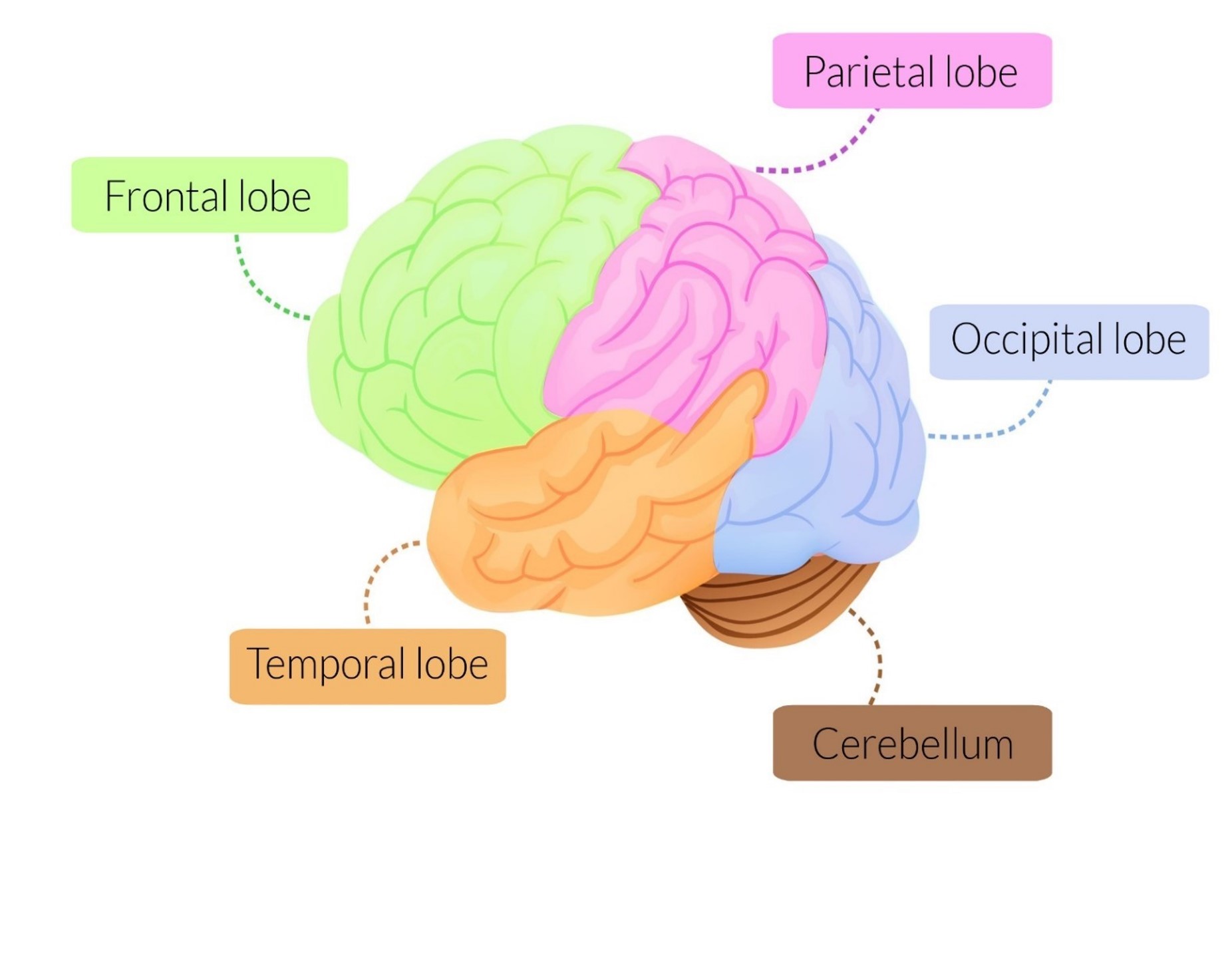 Changes to The Brains Regions
Frontal Lobe:
- Planning
- Problem solving
- Emotion regulation
- Behavioral control
- Personality
Parietal Lobe
- Perceptions
- Making sense of the world
- Arithmetic and spelling
Occipital Lobe
- Vision
Temporal Lobe
- Memory
- Understanding
- Language
Cerebellum
- Coordination
- Balance
- Posture
- Motor-learning
- Sequence learning
- Reflex memory
- Emotional processing
Slide 16
- Sensitive to social environment
- Creativity and imagination
- Strong emotions, can shift quickly
- Reliance on intuition/gut feelings
- Primed for learning
- Curiosity, drive for exctiement and novelty
Slide 17
Addiction and the Brain
Slide 18
Risk and Protective Factors
Risk Factors
Increase the chances of experiencing substance use problems
Examples:
- Developmental vulnerability
- Drugs are widely available at home or in the neighborhood
- Lack of adult supervision
- Family history of substance use problems
- Mental health challenges (such as depression or anxiety)
Protective Factors
Reduce risk; act as a shield against risk factors
Examples:
- Anti-drug use policies at school
- Participation in structured extracurricular activities
- Practicing multiple coping strategies (exercise, humor, breathing, music, etc.)
- Having at least one caring, supportive adult mentor
Slide 19
Mind Matters
Slide 20
Mind Matters
Slide 21
Discussion: Reasons for Misuse and Healthy Alternatives
Activity #1: Identify
Working in your groups, think of reasons MT teens might misuse Rx medications and
write each reason on its own sticky note.
Activity #2: Categorize
Classify each reason into one of the four categories, then send one group member to
place the sticky notes on the posters.
Activity #3: Consider Alternatives
For each of the four specific reasons selected by the facilitator, identify a healthy
way to accomplish that goal or get that need met.
Activity #4: Explore Barriers and Possible Solutions
For each of the four alternatives you identified, think of potential barriers that
would make it hard to take this action.
Activity #5: What are some ways to eliminate or reduce these barriers?
Finally, for each potential barrier, brainstorm with your group ways you could eliminate
or reduce those barriers.
Slide 22
Discussion: Healthy Living Leadership
How might preventing prescription drug misuse tie into your leadership role or efforts within your community?
Who is a trusted adult you can talk to if you are concerned about a friend?