

What are Stimulants
Stimulants are substances that speed up how the brain and body work. They affect energy, focus, alertness, heart rate, and breathing.
Prescription stimulants are medicines that doctors give to treat certain health problems, such as:
- ADHD (attention deficit hyperactivity disorder)
- Narcolepsy, a condition that makes people suddenly fall asleep
When used the right way, these medicines can help. But using them the wrong way can lead to harmful health problems.
Some commonly prescribed stimulant medicines include:
- Adderall
- Ritalin
- Dexedrine
- Diet pills such as Preludin, Fastin, and Meridia
People may also use slang names for these medicines, such as speed, uppers, or Vitamin R (a nickname for Ritalin).
Stimulants increase:
- Heart rate
- Blood pressure
- Breathing rate
- Alertness and energy
They can also lower appetite and help open the airways. These effects may seem helpful at first, but they can put stress on the heart and nervous system.
Short-term effects may include:
- Increased heart rate and blood pressure
- Increased breathing
- Elevated body temperature
Harmful or serious effects can include:
- Irregular heartbeat
- Heart failure
- Seizures
- Psychosis
- Anger or paranoia
Misuse of stimulants can lead to Stimulant Use Disorder (SUD).
Risks of using stimulants include:
- Irregular heartbeat
- Heart failure
- Seizures
- Strong mood or behavior changes, such as anger, fear, or false thoughts
- Overdose, which is a medical emergency
Signs of a stimulant overdose may include:
- Shaking or restlessness
- Fast breathing
- Confusion or panic
- Seeing or hearing things that are not real
- Very high body temperature
- Irregular heartbeat
- Muscle pain or weakness
- Seizures
Stimulant medicines are safest when you take them exactly as your doctor tells you. Using them the wrong way, like taking too much or using someone else’s medicine, can raise the risk of serious health problems.
Prescription stimulant misuse happens when people take these medicines:
- Without a doctor’s prescription
- In larger amounts or more often than told
- To stay awake, focus more, or do better in school or at work
- To lose weight
Adderall is the most commonly misused stimulant and is often used as a “study drug.” Ritalin is also often used the same way.
Diversion happens when prescription medicines are shared, sold, or used in ways a doctor did not intend. Some common examples are:
- Selling your medicine
- Stealing someone else’s medicine
- Getting prescriptions from more than one doctor without them knowing (“doctor shopping”)
- Buying medicine from illegal websites
- Doctors giving prescriptions in unsafe or illegal ways
Medicines that are often diverted include:
- Opioids (strong pain medicines)
- Stimulants (medicines that increase energy or focus)
- Depressants (medicines that slow the body down)
- Hallucinogens (drugs that change how you see or feel things)
- Steroids (drugs sometimes used to build muscle)
Diversion is illegal in Montana.
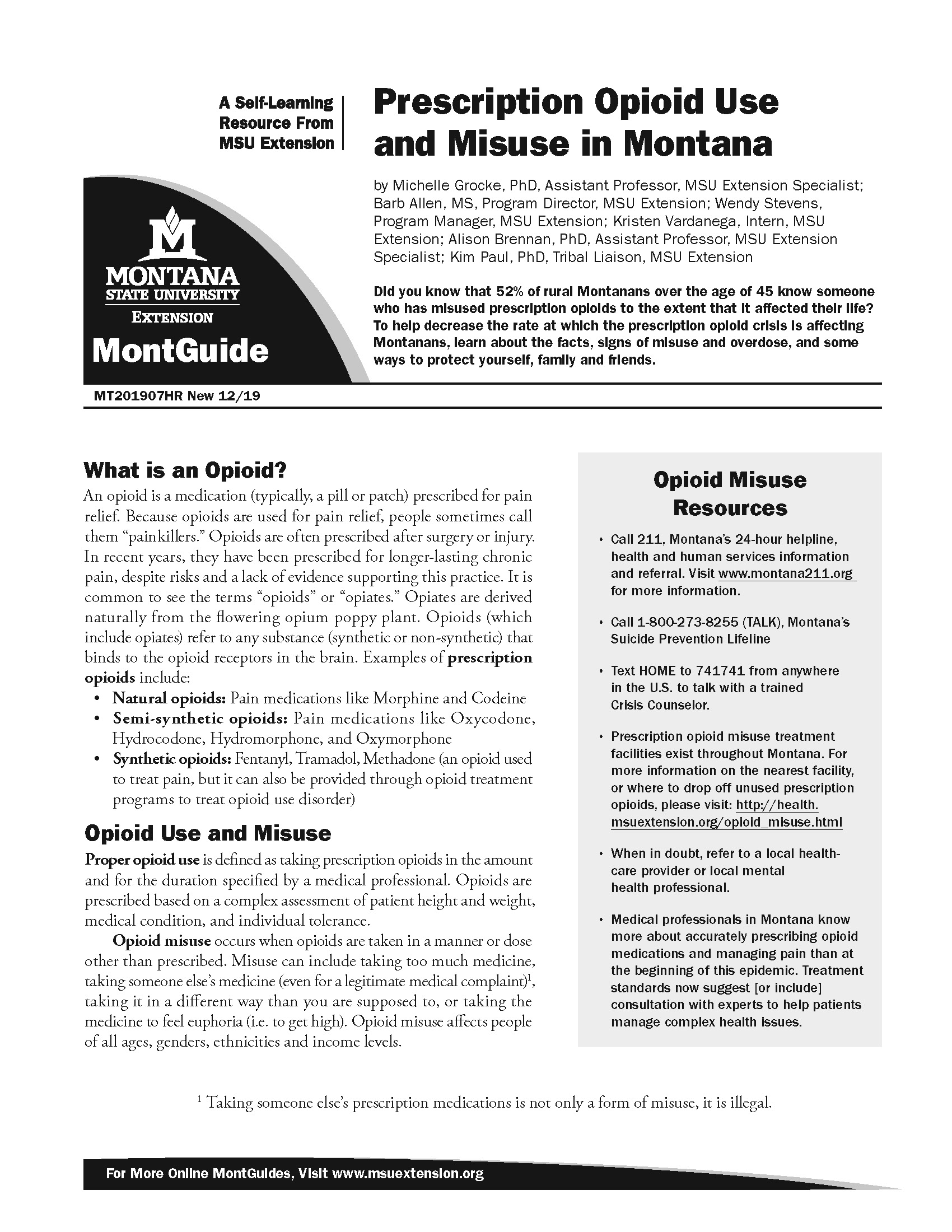
Read this self-learning MontGuide from Montana State University - Prescription Opioid Use and Misuse in Montana
Coming soon: Prescription Stimulants for Attention-Deficit/Hyperactivity Disorder (ADHD)
In this video, Montana 406 Recovery addiction psychiatrists Dr. Bob Sise and Dr. Ty Reidenbaugh provide a clear and informative overview of prescription stimulants.
Kratom
Some substances that are not prescription stimulants can still affect the body in similar ways and carry similar risks. One example is kratom.
What you need to know about kratom
Kratom is a tree that grows in Southeast Asia. In recent years, more people in the United States and other Western countries have started using it for its effects.
Kratom is illegal in some states, including Alabama, Arkansas, Indiana, Rhode Island, Vermont, and Wisconsin. In Montana, kratom is legal, but there are no clear rules for how it is controlled.
Dose‑dependent effects
- Small amounts may cause effects similar to stimulants, such as more energy.
- Larger amounts may cause calming effects and help reduce pain, similar to opioids.
You can visit the What are Opioids page to learn more about how kratom is used, its side effects, and safety concerns.